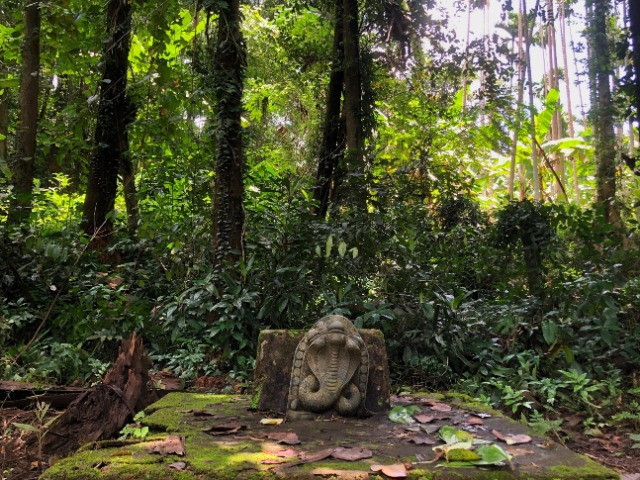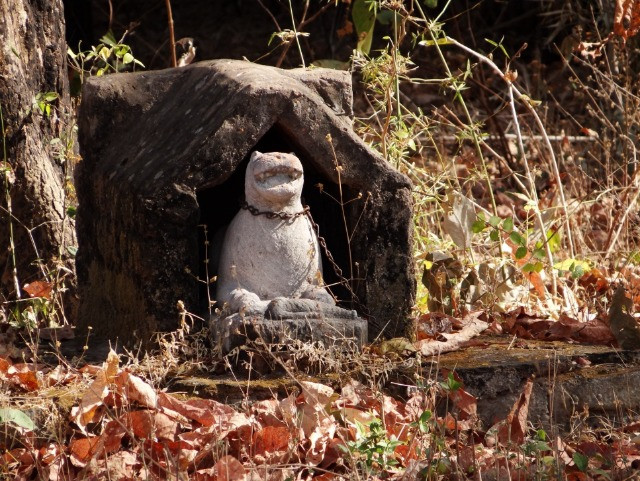
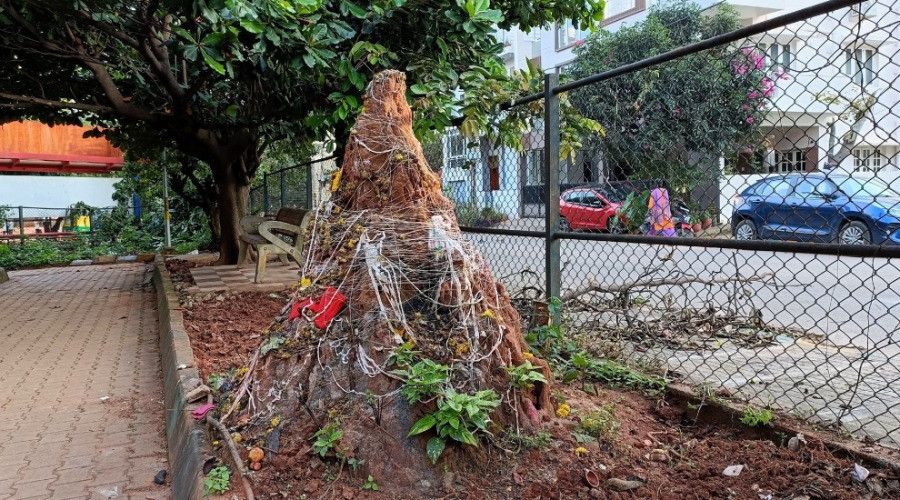
If you’ve ever wandered through a forest or strolled along a quiet park, you may have noticed curious clay structures rising from the earth. Some are tall and imposing, others small and subtle, all weathered by rain and time. To an untrained eye, they appear as simple soil mounds. To a scientist, they are marvels of natural engineering. But across India, millions regard them as sacred spaces, bridges between the natural and the divine. These are termite mounds.
The reverence for termite mounds springs from two deep-rooted beliefs. The first links them to fertility, while the second connects them with snakes. In ancient agricultural societies, soil fertility was the lifeblood of survival. The termite mound, rising organically from the earth, came to symbolize the womb of the Earth Mother, a regenerative force that renewed life in cycles. The second belief ties the mound to the serpent god, especially celebrated during the festival of Naga Panchami, when people worship snakes seeking protection and blessings.
Though these practices may seem random, they do have nuggets of ecological truth. Termites are among nature’s most efficient recyclers. By decomposing vast amounts of dead wood and plant matter, sometimes 40 percent to 100 percent, they transform organic debris into nutrient-rich soil, enriching the land around them. Early cultivators and pastoralists likely observed that pasture remained greener and crops thrived near termite mounds, even in dry seasons. This natural advantage must have seemed like evidence of the mound’s life-sustaining power. It was only natural to see the termite mound as the sacred womb of the mother goddess, nurturing life itself.
The connection between termite mounds and snakes also has a natural explanation. As termites build intricate tunnels, they cultivate a special fungus called Termitomyces, which helps break down tough plant material into nutrients. Under the right conditions, this fungus produces umbrella-shaped mushrooms with a fruity smell. Some of these mushrooms look strikingly like snakes, with curved caps and bulbous stems that resemble hoods and coils. It’s easy to imagine our ancestors noticing this and linking termite mounds with serpents. On top of that, abandoned or damaged termite mounds often became cool, sheltered hideouts for real snakes. Farmers and villagers who found snakes resting in these mounds naturally saw a connection, reinforcing the idea that termite mounds were the natural homes of snakes. Over time, these practical observations became part of sacred traditions.
Because of these deep-rooted beliefs, communities have long protected termite mounds. Seen as sacred and untouchable, they were never destroyed but worshipped. Even today, during Naga Panchami and other festivals, people visit termite mounds to offer milk, flowers, and prayers, often tying a thread to symbolize their connection with the natural world and to pray for abundance.
Modern science now reveals the ecological brilliance of termite mounds. Their intricate structures improve soil aeration, retain moisture, and create habitats that support a rich diversity of life. Yet their cultural significance endures, much like the ancient trees that stand beside them. The true wonder of the termite mound lies in its quiet message of coexistence. Built not by human hands but by some of the smallest architects on Earth, it stands as a reminder that respecting nature was never simply superstition. It was an ancient invitation to see the extraordinary in the ordinary and the sacred in the soil beneath our feet.