
Tadoba has long been home to ancient trees, a rich diversity of wildlife, and people living in a delicate balance. Generations of farming families, migrants, and diverse communities have built their lives here, bound by traditions shaped by the natural rhythms. Across castes, regions, and livelihoods, one bond endures: a deep cultural and spiritual reverence for the wild, especially the tiger.
The Tiger God
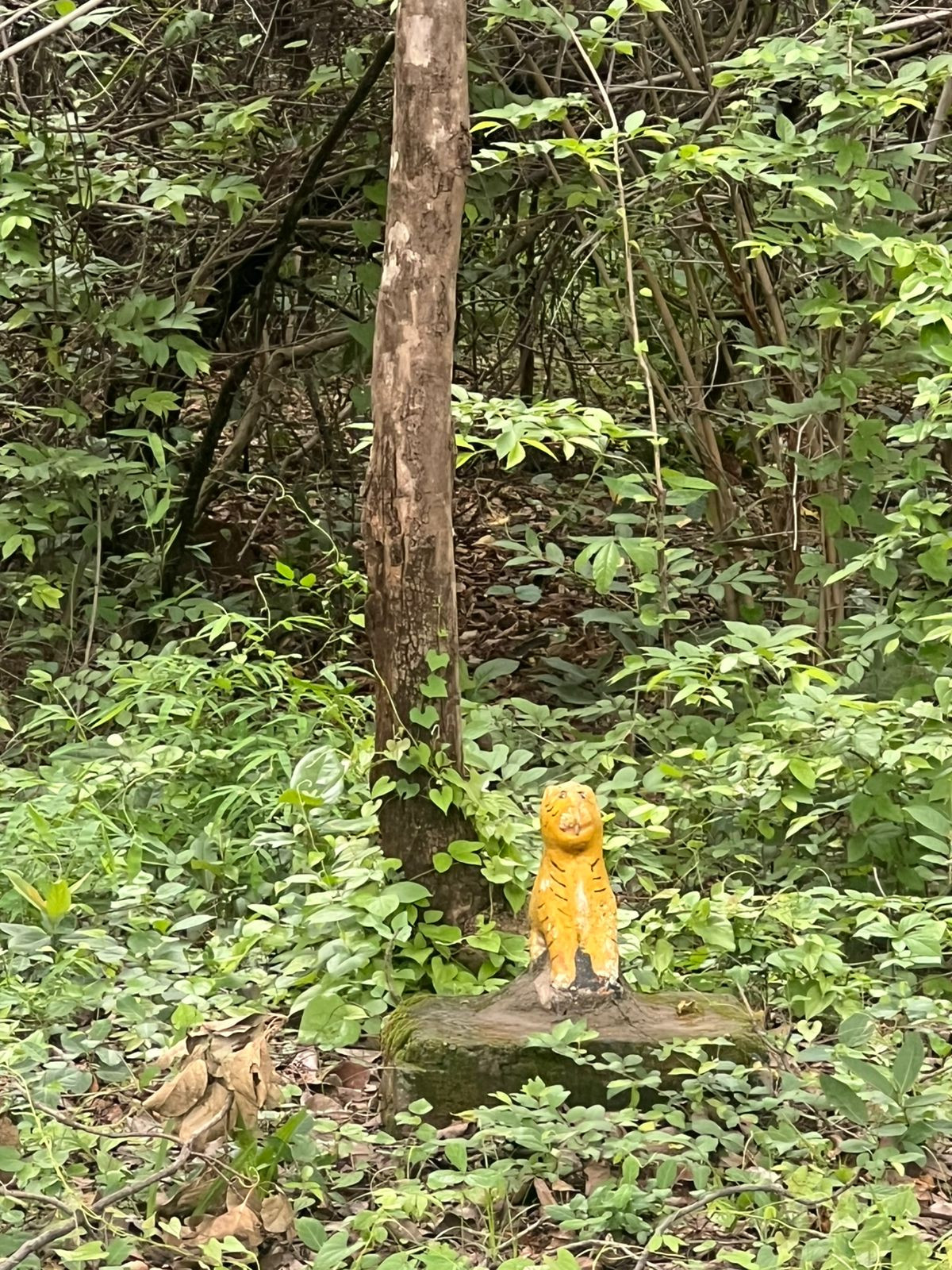
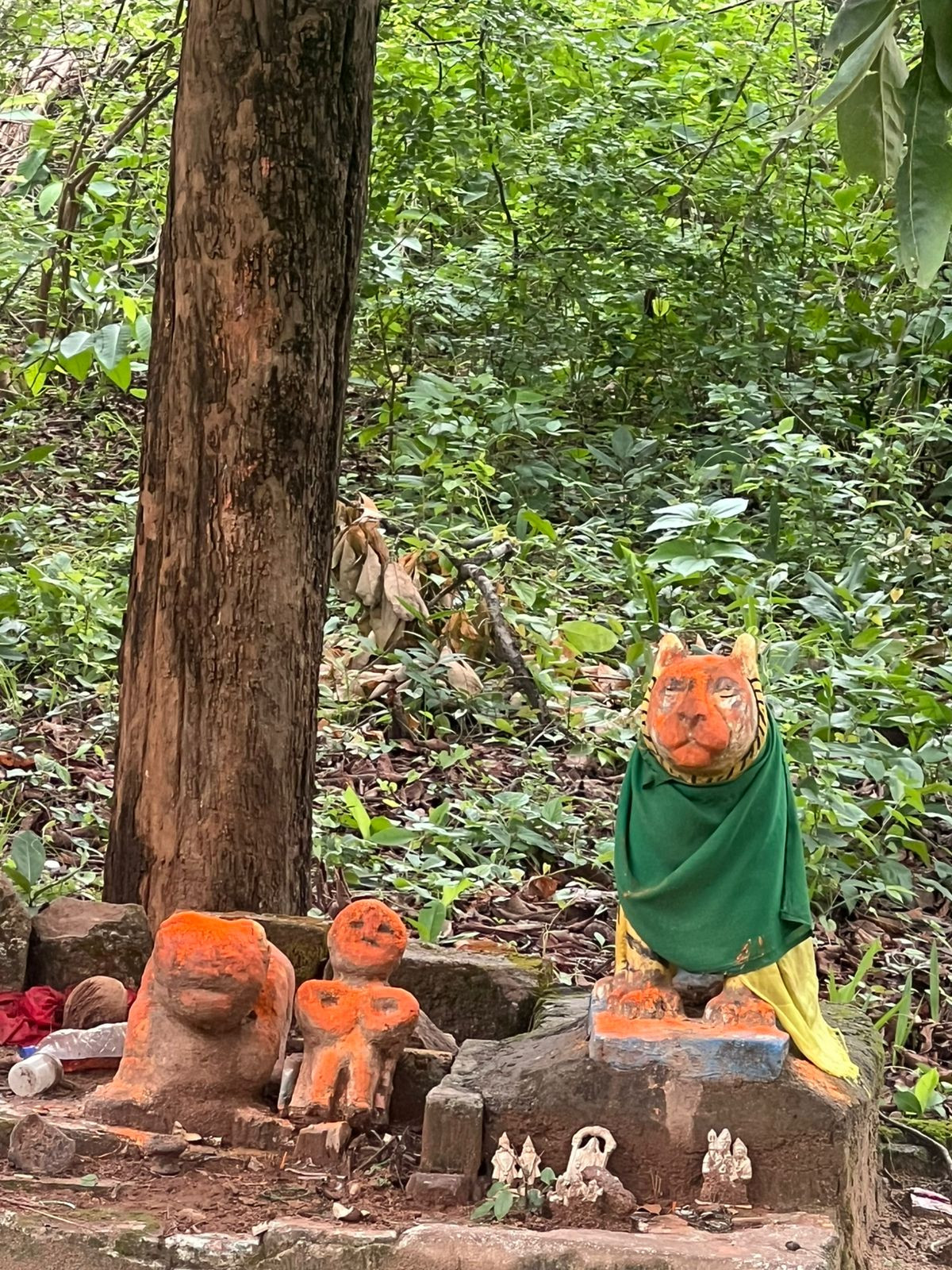
Here, the tiger is not just an animal of strength and beauty. It is Waghoba, a guardian, a deity, and a spirit woven into everyday life. Tribal communities across Tadoba revere Waghoba not only as a protector of the forest but as a being with whom they share a sacred relationship. Many believe that those taken by tigers do not truly die but instead become part of the tiger’s soul, walking with Waghoba in the forest.
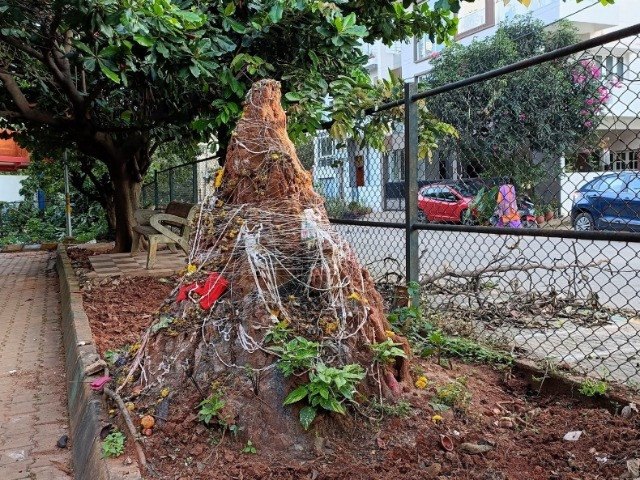
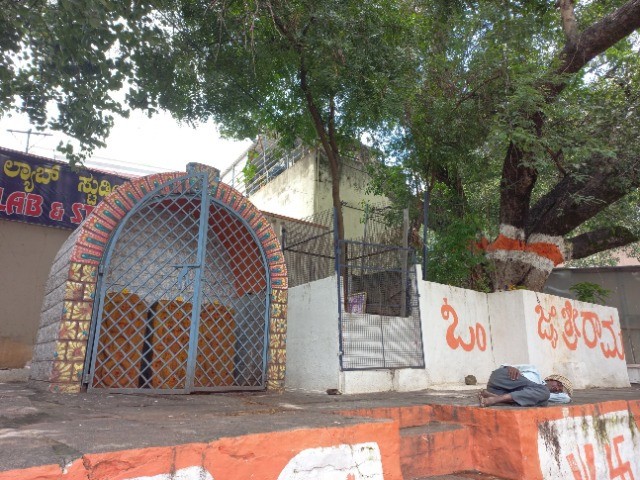
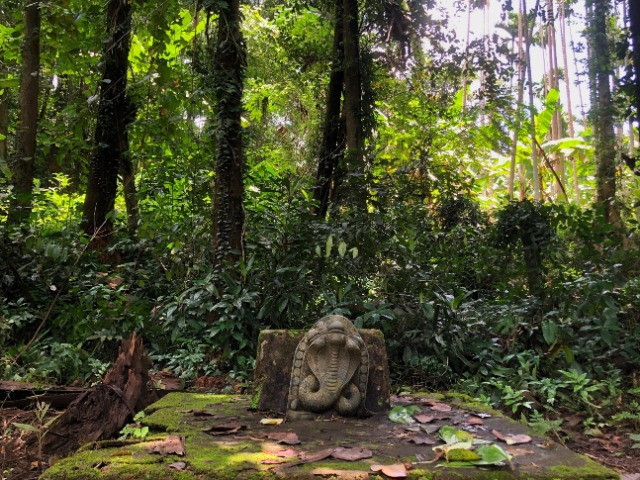
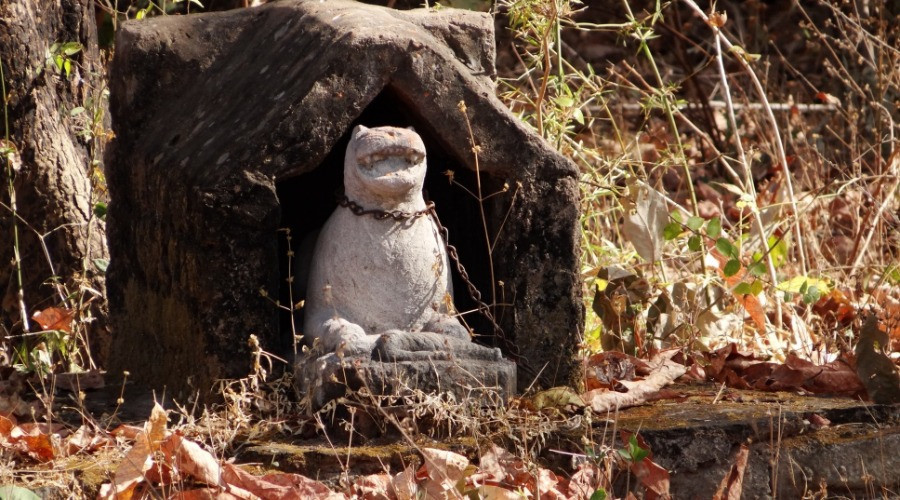
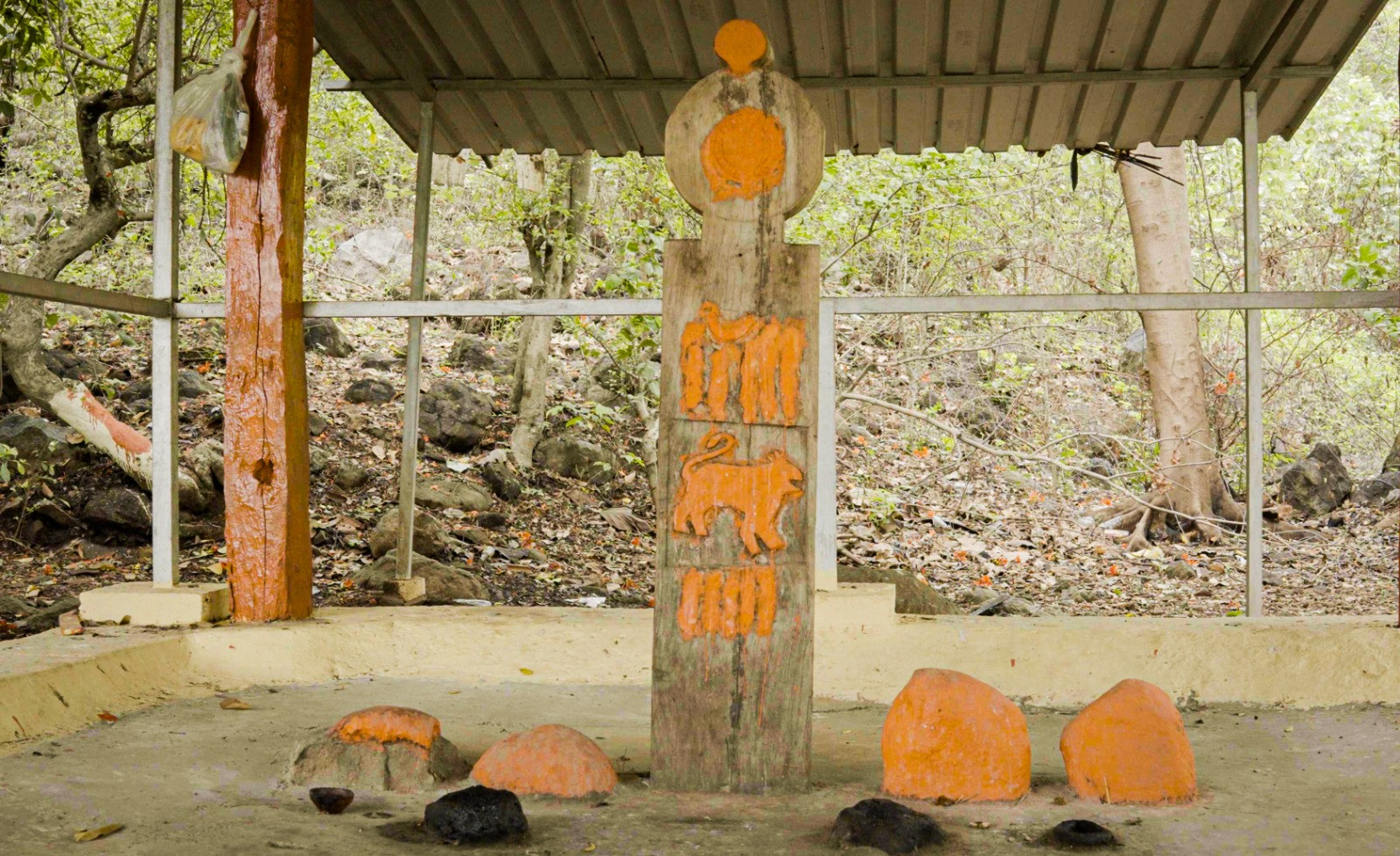
Shrines dedicated to this tiger god are found beside fields, at forest edges, and even in village courtyards. Offerings of coconuts, flowers, and incense are made not out of fear but devotion. The shrines vary; some are modest stone carvings of a tiger, others are clay idols or human-like stone figures representing those who have lost their lives to tigers. In some cases, families wrap a small metal chain around the idol’s neck, symbolically asking the tiger to hold back. These shrines are not static memorials but living parts of community life, spaces where grief, prayer, and hope meet, and where loss is met not with vengeance but with reverence.
Coexistence, Not Conflict
This spiritual outlook helps explain why retaliatory attacks on wildlife are rare in Tadoba. Even in the face of danger, responses are shaped by cultural restraint and ecological understanding.
A recent survey across more than 55 buffer zone villages of the Tadoba-Andhari Tiger Reserve revealed stories of coexistence. In forest-edge villages, residents spoke of tigers resting in agricultural fields, leopards prowling near wells, and sloth bears visiting at dusk. Yet, in every place, one theme was consistent: people see themselves as sharing space with the wild, not separated from it. These encounters were rarely described with fear; instead, they were shared with quiet respect. Some farmers even saw tigers as protectors, keeping wild boars, known for damaging crops, at bay. In Singarzari village, an elder once folded his hands and softly said, “Waghoba pahato ahe” (the tiger is watching). It was not a warning but a reminder of shared presence and mutual respect.
Rituals of the Forest
During the summer, when tendu leaves and mahua flowers are collected from the forest, many villagers pause before entering, touching the earth and whispering a silent prayer to Waghoba. In Doni village, a Mahua tree becomes a sacred gathering point during Buddha Purnima.
These acts are not only spiritual. They are practical knowledge passed down over generations. People know how to read signs of animal movement, when to stay still, and how to share space with the wild. Coexistence here is not an ideal. It is a way of life.
The Promise and Peril of Eco-Tourism
In recent years, eco-tourism has brought both opportunity and challenge. Villages like Agarzari, Adegaon, Kolara, Alizanza and Moharli have embraced tourism as a source of income, with local youth working as guides, drivers, and hospitality staff. Tourists may arrive to see tigers but often leave with stories of ancient beliefs, resilient communities, and a forest alive with history.
However, tourism brings its own pressures. In some areas, it leads to increased waste, noise, and human disturbance. There’s always a risk that the tiger becomes a spectacle rather than a spirit. Yet for many young people, tourism offers a chance to stay connected to their land, while building a livelihood rooted in storytelling, conservation, and pride.
Changing Landscapes, New Challenges
Tadoba’s flat terrain and black cotton soil make it ideal for farming, but the coal beneath has drawn rapid development. As farms, settlements, and roads expand, space for wildlife shrinks and conflicts, though still rare, are increasing. Crop losses from wild boars are rising, solar fences often fail, and poor road connectivity isolates villages during the monsoon. While areas like Brahmapuri benefit from faster digital livestock compensation, other villages face delays. Grazing land is scarce, and some families must risk venturing near forest edges, making these daily challenges constant and demanding.
Carrying Waghoba Forward
As some villages relocate, like Kolsa already has and Rantalodhi soon will, families move to areas with better amenities. Yet they carry something intangible: their stories, their memories, and their guardian spirit.
In new settlements, shrines will be rebuilt, offerings made under new trees, and children will hear the old stories. Meanwhile, the original shrines in Tadoba will stand as markers of belief and reminders that the forest is not an enemy but an elder, sometimes demanding, always sacred.
The True Meaning of Conservation
Tadoba’s story is one of cultural resilience, quiet reverence, and coexistence rooted in memory and ritual. In a time of growing human-wildlife conflict, the people here offer a vision where conservation is not enforced but inherited, not a set of rules but a way of life.
And Waghoba remains the guardian of them both.
Acknowledgement: Study supported by the Tadoba-Andhari Conservation Foundation and the DeFries Bajpai Foundation Grant.