Tell us the story behind the photograph (below) that won you the award.
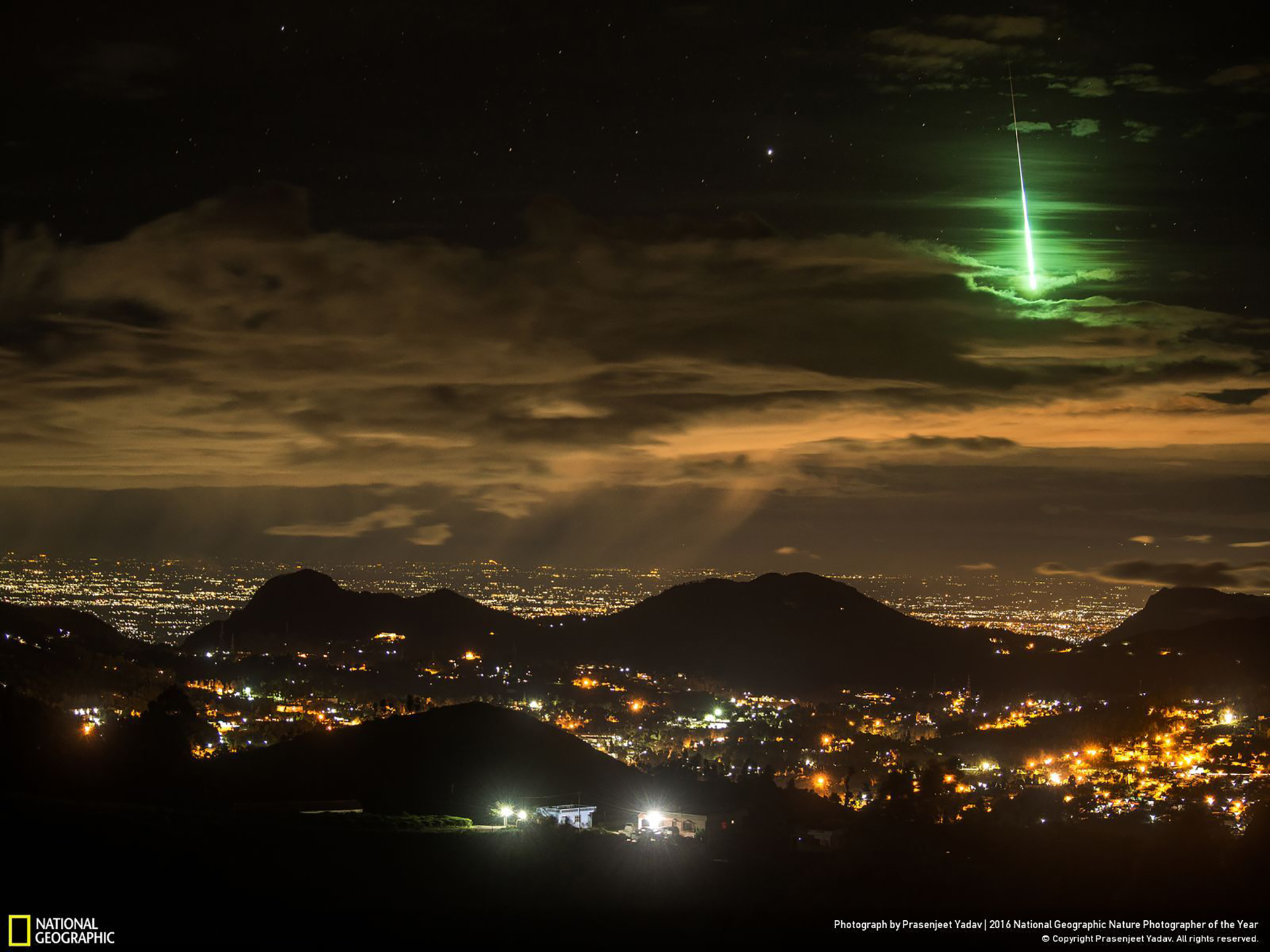
A fellow collaborator and I had been on the road for a few days, looking for a shot in Udhagamandalam, Tamil Nadu, that portrayed that mountains were not only isolated by deep valleys but also by enormous urbanisation. After scouting around for a few days, we zeroed in on a location between Udhagamandalam and Coonoor; we were on the Udhagamandalam mountain, looking down on Mettupalayam town. I set up my camera and started the time lapse at 1am for 999 images at a 10-second gap and a 15-second exposure. The next afternoon, I was reviewing my images and was astounded when I found this picture. This is probably the only composed photo of a green meteor; no photographer can plan this shot. Everything else in the image was hard work, but for those 15 seconds, I was the luckiest photographer on the planet. It was titled 'Serendipitious Green Meteor'.
What was the equipment used?
I used a Nikon D600 with a Nikon 24 to 70mm f2.8 lens.
You seem to prefer photostories to single photos. Why is that?
Single pictures are good, they do tell stories, but we live in a world where everyone is a photographer — everyone owns a cellphone and cameras. What sets a picture apart is the story behind it. So, I’d prefer a picture, which tells a story, and is not just a moment. I’m more a story photographer rather than an action one. I prefer taking four images narrating a thread that would make people think or feel. Having said that, I’ve been chasing nine shots for three years, but I haven’t gotten them yet. I’ve been trying to shoot them over and over again.
So, you first visualise a story and then chase the shots. Does that interfere with a story that might form itself organically?
I do prefer a structure — just going to a place and winging it is not my style. However, once I am there, I have to be fluid. There has to be a balance between the shot in my mind and the actual conditions on ground. Choice is extremely important, because the final photograph is a result of that. If I come across two equally appealing shots, I have to choose, sometimes at the cost of an amazing moment purely because of the kind of story I am working on.
Have you ever regretted letting a moment go?
Frankly, no; because at that moment, that is exactly what I wanted. That cool moment might have gotten me a few more likes on social media, but ultimately what matters is the story I’ve committed to.
What happens in case you are unable to get all the shots in a sequence? How do you make up for the disappointment?
I’m never satisfied with what I do; there’s always a level of disappointment, especially when when I’m on a tough deadline with less time on hand. My editor might say, “oh, this is great, I never thought you could pull it off in a week”, and I’d be thinking, “I haven’t”. But I play along, all the while berating myself internally about how much better I could have done.
Once you've taken a series of photographs, what are your processing methods?
I look at my images in terms of trips, not stories. On every trip, I usually collect thousands of images. I review images after every trip. I use (Adobe) Lightroom, grade images, pull them out grade-wise — 1 star, 2 star, 3 star — look at all of them again, improvise my script further and regrade. It usually takes me the same amount of time to get down to 50 images from tens of thousands as it takes to get down to 10 from 50. I sequence them, show them to my editor, and collectively decide on the final list.
What are the criteria by which you judge a shot worthy?
Lighting matters to me the most — whether artificial or natural. I’m more pleased by natural lighting, but the idea is to look at everything — aesthetics, technicalities, light, composition — and once it all fits, I look at the story. Fortunately, I have great editors working with me on my stories; I’m biased when it comes to my own pictures. I might deem a shot great based on how tough it was for me to capture the image, but my editor might think he/ she’s seen better. So as a photographer, I have to be my own biggest critic.
How much has your background helped your storytelling skills?
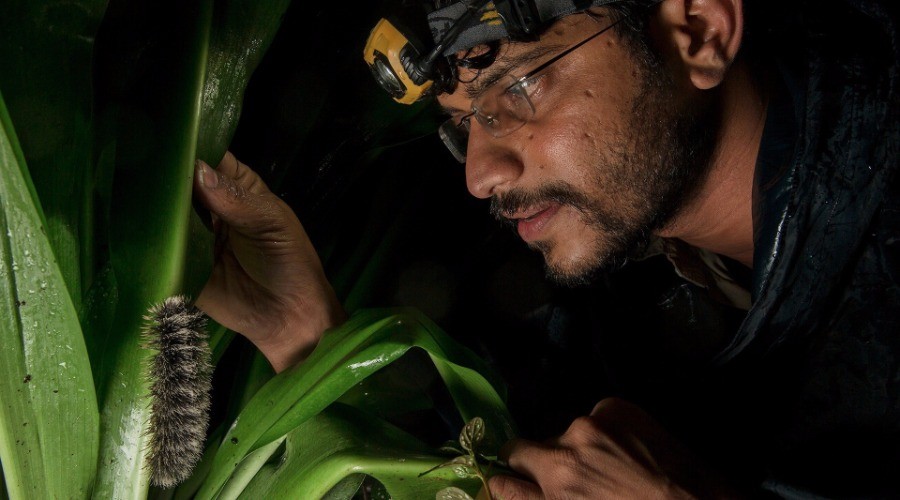
I am totally a result of my background. I was born in the middle of a jungle in central India (near Nagpur, Maharashtra); my father has a small farm where I grew up and we used to have tigers wandering across our land. I was always interested in wildlife but never interested in its tourism aspect; curiosity and a thirst for learning led me to train as a molecular biologist. I learnt the nitty-gritties of life sciences over time — the protocol of science is very similar to the protocol I follow for my own stories: I have a story (question), I have an idea of how the story should pan out (hypothesis), I take pictures (data collection), I look at my pictures (check data), and then I compare the accuracy of my hypothesis versus the data collected. I assemble this, write the photostory, then publish it. I don’t think I’d call myself a conventional wildlife photographer, I’m more of a storyteller and I prefer doing science stories.
What are you working on now?
This entire month, I will be curating National Geographic’s Your Shot. I’m also designing a science photography workshop, most probably to be held in February. It’s not going to be about making scientists photographers, but making them photo-literate. Today, 'communicating' science is more important than practicing it, and photography is a great tool for that.
To see more of Prasenjeet's work, visit www.prasenjeetyadav.com